


























Telegram vs WhatsApp? That's the Wrong Question

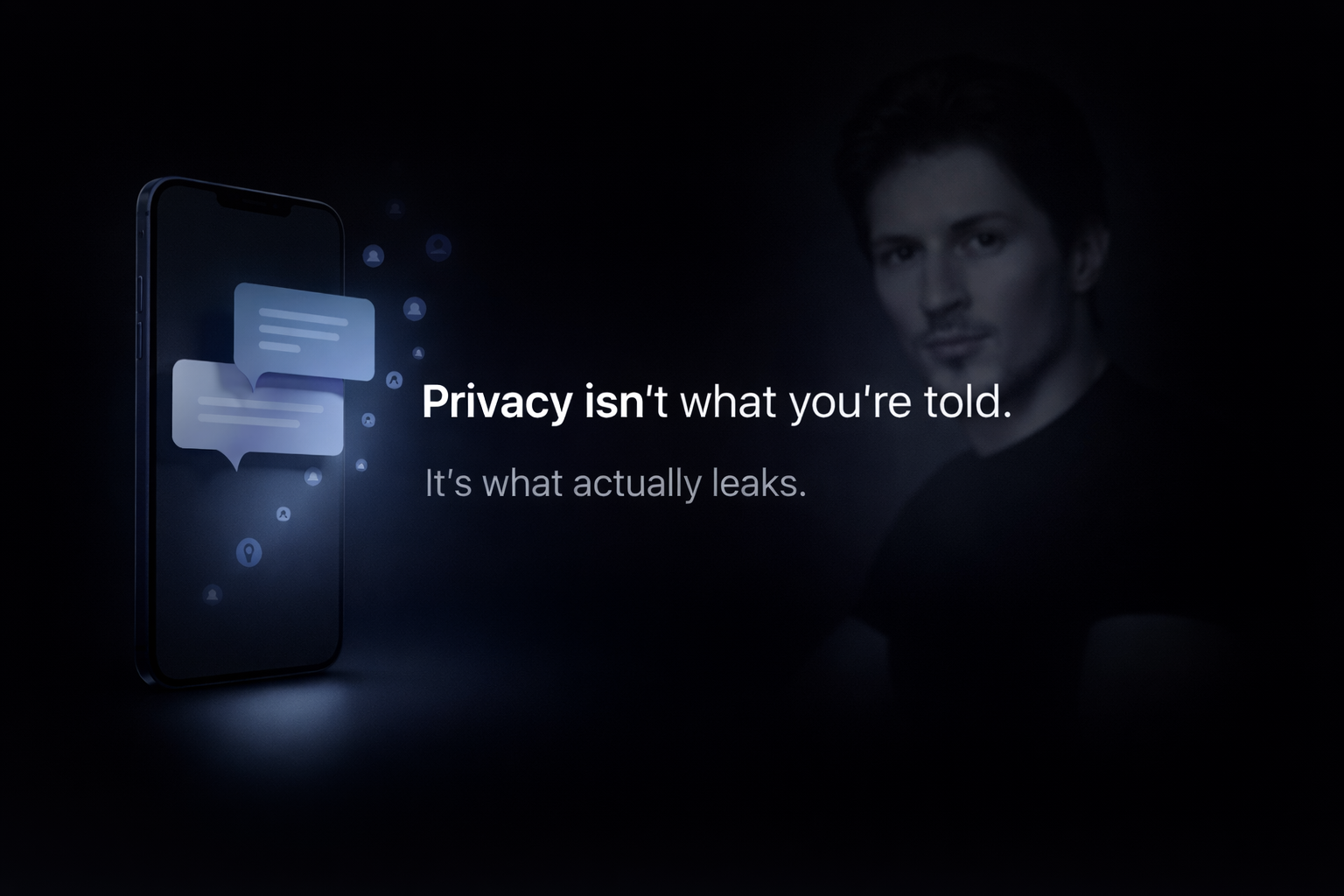
“You'd have to be braindead to believe WhatsApp is secure in 2026.”
That's what Telegram CEO Pavel Durov said recently.
It's a strong statement and it definitely grabs attention.
But here's what's worth thinking about 👇
In tech, especially when it comes to privacy, bold claims dont always reflect the full picture.
Telegram has positioned itself as a privacy-first platform for years.
At the same time, there have been real concerns around how user data can be exposed not necessarily through breaches, but through how the platform is designed and how third-party tools interact with it.
We've already seen cases where users unknowingly expose:
• Phone numbers
• Contacts
• Shared media
• Activity data
All because of how features, permissions, and integrations work together.
On the other hand, WhatsApp despite ongoing criticism applies end-to-end encryption by default in personal chats.
So the conversation shouldn't be:
“Which app is better?”
It should be:
“How is user privacy actually implemented and where can it fail?”
Because here's the reality:
Most users dont change default settings.
Most users dont review permissions.
Most users assume the platform has their back.
And that assumption is where risk begins.
💡 Key takeaway:
Privacy is not just a feature.
Its a combination of product design, user awareness, and responsible usage.
No platform is completely secure if users interact with it casually or without understanding the implications.
If youre serious about digital privacy in 2026:
• Be mindful of third-party tools
• Regularly review your settings
• Understand what data youre sharing
• Question strong narratives even from industry leaders
Because in the end, privacy isnt defined by statements.
Its defined by systems and how people actually use them.
Please sign in
Login and share